She Drew the Prairie From Memory — And the Government Used Her Maps Without Saying Her Name
The Kansas prairie in the 1870s was a place that punished optimism. Federal land agents described it in the language of promise — fertile soil, generous rainfall, a fresh start for any family willing to work. What they left out of the brochures was the drought, the grasshopper plagues, the winters that arrived without warning and the summers that cooked the creek beds dry. Thousands of homesteading families discovered the gap between the promise and the reality too late, and many of them paid for the miscalculation with everything they had.
Her husband was among them.
She had come west from Ohio as a schoolteacher, newly married, full of the particular optimism that comes from having read about a place rather than lived in it. The claim they staked in central Kansas looked good on paper — and that, it turned out, was almost exactly where its virtues ended. The soil in their section drained poorly. The water source the land agent had marked on his map bore little resemblance to the seasonal trickle they found. Three failed harvests later, her husband was dead of exhaustion and debt, and she was alone on a quarter-section of broken land with a box of surveying tools he had ordered from a catalog and never fully learned to use.
What Grief Made Her Do
The conventional response to her situation — the one that everyone around her expected — was to return to Ohio. Sell what could be sold, pack what could be carried, go home to family. She was a young widow with teaching credentials and no particular reason to stay.
She stayed anyway.
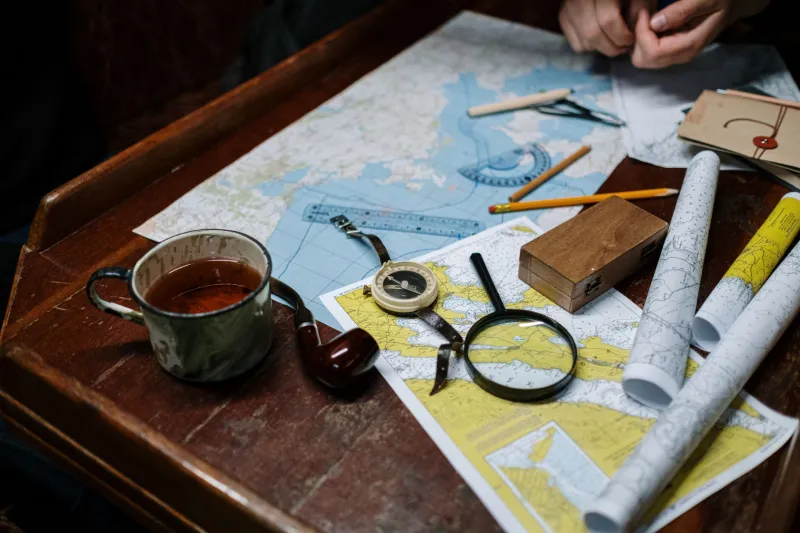
Later accounts suggest she couldn't fully explain why, even to herself. Part of it was stubbornness. Part of it was something closer to a scientific compulsion — a need to understand why the land had failed them, why the maps she had trusted had been so catastrophically wrong. She had grown up in a household where her father surveyed township boundaries for a living, and she had absorbed more of that education than anyone had realized or credited. She picked up her husband's surveying tools and began walking.
What she was doing, in the absence of any formal commission or official sanction, was conducting a systematic survey of the soil conditions, water sources, drainage patterns, and seasonal weather variations across a substantial swath of central Kansas. She did it on foot, mostly, and later on a borrowed horse. She took notes in a series of composition books and began translating them into hand-drawn maps of a detail and accuracy that the federal surveyors working the same territory had never come close to achieving.
The Maps Nobody Was Supposed to See
She had no intention of publishing anything. The maps began as a private project — a way of making sense of what had happened, of converting grief into something that had edges and could be measured. But word travels in small communities, and settlers who were trying to decide where to file their claims began finding their way to her door.
She showed them what she had. She explained which sections held water through August and which went dry by June. She marked the soil types that held up under drought and the ones that compacted into something close to concrete after two rainless months. She noted the microclimates created by creek bends and tree lines, the spots where late frost came early and early frost came late. She told people, in plain language, where to go and where to stay away from.
The settlers who followed her guidance fared measurably better than those who relied on federal maps. Word spread further. She began receiving letters from land agents in neighboring counties, from homesteading associations in Missouri and Illinois, from a Presbyterian minister in Topeka who was helping newly freed Black families navigate the land rush and desperately needed information he could trust.
She answered every letter.
The Moment the Government Came Knocking
The General Land Office had been struggling for years with the gap between its official surveys and the reality on the ground. Settlers were filing complaints. Failed claims were generating legal disputes. The office's credibility was eroding in direct proportion to the distance between what its maps showed and what the land actually did.
 Photo: General Land Office, via www.arcgis.com
Sometime in the early 1880s, a regional land office superintendent became aware of the maps she had been distributing informally across central Kansas. The story of how he obtained copies varies depending on the source — some accounts suggest he simply asked her; others imply that a set of her maps was handed to him by a third party without her knowledge. What is consistent across all versions is what happened next: the information in her surveys was incorporated into revised federal land records, her methodology was adopted as a template for how soil and water conditions should be documented, and her name appeared nowhere in the official record.
The maps were credited to the land office itself. The improved surveys were attributed to a new initiative by the federal government. She received a letter thanking her for her cooperation with federal land administration efforts. It did not mention payment. It did not mention credit. It was, in the language of bureaucratic appropriation, a masterpiece of erasure.
What She Left Behind
She taught school in Kansas for another twenty years after her maps were absorbed into the federal system. She never stopped documenting — the composition books kept filling up, the hand-drawn charts kept accumulating in the back room of the small house she eventually owned outright. She trained several of her female students in basic surveying technique, quietly expanding a tradition of practical geographic knowledge that had no official name and left almost no official trace.
Historians working on Great Plains settlement patterns in the late twentieth century began noticing anomalies in the federal land records from the 1880s — a sudden improvement in survey accuracy, a shift in methodology that the official record didn't fully explain. Following the thread backward, some of them found her. Found the composition books, which her grandchildren had kept. Found letters from settlers thanking her by name for guidance that had saved their claims.
The federal records still don't mention her.
But the land that thousands of families farmed, the claims that held, the communities that took root in the right places rather than the wrong ones — that is, in some real and measurable sense, her work. The prairie she walked and documented and mapped from grief became the foundation that others built on. She just never got to sign it.