The Books Were Her Cover Story: How One Librarian Secretly Bankrolled the Movement That Changed America
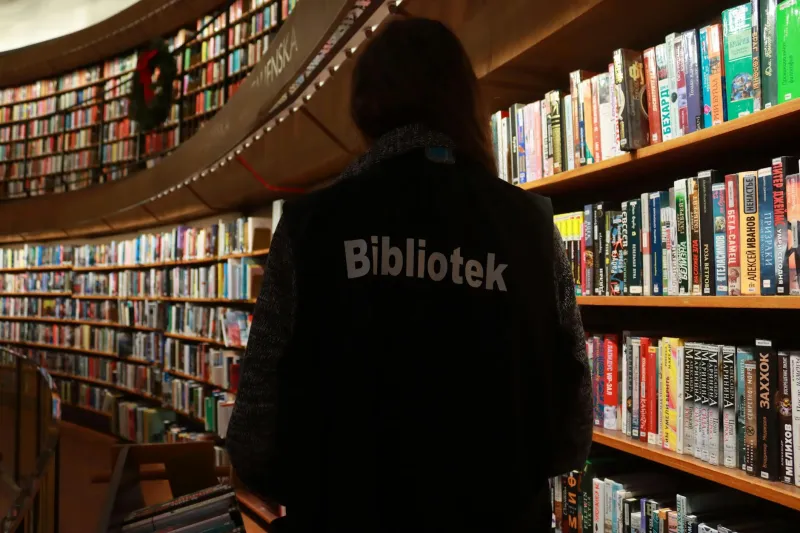
The Woman Behind the Card Catalog
In 1955, when Rosa Parks refused to give up her bus seat in Montgomery, the world watched as a movement exploded into the national consciousness. But what the cameras didn't capture was happening 200 miles away in a small Alabama town, where a 34-year-old Black librarian named Viola Gregg was quietly becoming one of the Civil Rights Movement's most crucial—and invisible—financiers.
Gregg had discovered something powerful: nobody suspects the librarian.
The Perfect Cover
To the white power structure of 1950s Alabama, Viola Gregg was exactly what they expected—a soft-spoken Black woman who stamped books, organized reading programs for children, and kept meticulous records. What they didn't know was that those "library records" included coded ledgers tracking donations, safe houses, and escape routes for activists moving through the underground railroad of the Civil Rights era.
Gregg's position as head librarian at the Tuskegee Institute's branch library gave her access to something revolutionary: a network that stretched across the South. University connections, visiting scholars, northern philanthropists, and local community members all passed through her domain. And in a segregated society where Black professionals were watched with suspicion, librarians remained curiously invisible.
"Books don't threaten anyone," she once told her sister. "That's exactly why they should."
The Numbers Game
What started as collecting spare change for bus fare grew into something far more sophisticated. Gregg developed a financial network that would make modern money launderers jealous. She used the library's legitimate book-ordering system to create fake invoices, channeling donations from northern supporters into "educational materials" that were actually funding freedom rides, bail money, and safe passage for activists.
By 1962, she was moving nearly $50,000 annually through her operation—roughly $400,000 in today's money. The beauty of her system was its simplicity: who would question a librarian ordering books?
She maintained three sets of books. The official library ledger that any inspector could review. A personal notebook tracking her actual library business. And a third record, hidden in a hollowed-out copy of "Democracy in America," that contained the real accounting of the revolution.
The Safe House in Plain Sight
The library itself became a crucial stop on the modern underground railroad. Activists traveling between Montgomery, Birmingham, and Atlanta knew they could find food, shelter, and clean clothes in the library's basement after hours. Gregg had convinced the university administration that she needed overnight access for "inventory management."
She created a simple code system using library card numbers. A card stamped with "overdue" meant danger—stay away. "Renewed" meant safe passage. "Lost item" meant immediate evacuation needed.
Students and faculty knew that certain books were never actually on the shelves. Requesting "To Kill a Mockingbird" meant you needed emergency funds. "Invisible Man" was code for safe transport. "The Fire Next Time" meant you were being watched.
The Network Expands
Gregg's operation grew because it solved a crucial problem: how to move money and resources without triggering the surveillance that followed more visible activists. While FBI agents monitored churches and community centers, they ignored the quiet librarian who seemed to spend her days helping children with homework.
She recruited carefully—other librarians across the South, teachers, and postal workers. People in positions that seemed mundane but offered access to communication networks and community trust. By 1963, her network stretched from Florida to Virginia, with coordinated cells that could move resources and people across state lines.
The brilliance was in the mundane details. Library interloan requests became a communication system. Book donations from "concerned citizens" in New York and Boston arrived with cash hidden in the binding. Reading programs for children doubled as recruitment and training sessions for young activists.
When the Heat Came Close
Gregg's closest call came in 1964 when a local sheriff, suspicious of the unusual amount of activity around the library, demanded to inspect her records. She calmly showed him her official ledger, explaining that the increased traffic was due to a new adult literacy program—something the sheriff couldn't object to without looking like he opposed education.
What he didn't know was that the "literacy program" was real, but it was teaching more than reading. Participants learned how to navigate voter registration, understand legal rights, and organize community action. The books were cover for a different kind of education entirely.
The Legacy in the Stacks
Viola Gregg never sought recognition for her role in the Civil Rights Movement. When researchers finally uncovered her story in the 1990s, they found meticulous records of an operation that had funded thousands of activists, provided safe passage for hundreds of freedom riders, and helped organize dozens of voter registration drives.
She had understood something that many revolutionaries miss: sometimes the most powerful position is the one nobody notices. While others fought in the spotlight, she worked in the shadows, using the very assumptions about her limitations as her greatest strengths.
Gregg retired in 1978, having spent 23 years quietly bankrolling a revolution. Her final act was donating her hidden records to the National Archives, ensuring that history would remember not just the voices that rang out from podiums, but the whispered conversations that happened between the stacks.
The Lesson in the Margins
In a movement defined by bold speeches and dramatic confrontations, Viola Gregg proved that revolution sometimes happens in the margins—literally. Her story reminds us that the most consequential changes often begin with people who seem powerless, working within systems that underestimate them.
She turned invisibility into influence, transformed stereotypes into strategy, and proved that sometimes the most dangerous person in the room is the one everyone assumes is harmless. The books were her cover story. The revolution was her real work.