The GI Bill Reject Who Fed America One Sandwich at a Time
When Everything You Know About Business Comes From War
The loan officer at First National didn't even pretend to take him seriously. Here was a man with a pronounced limp, calloused hands, and a business plan scrawled on the back of a diner napkin. The year was 1947, and America was booming for everyone except the guys who'd actually won the war.
Frank Carney had returned from the Pacific Theater with shrapnel in his left leg, fifty-seven dollars in his pocket, and zero interest in using the GI Bill to sit in a classroom. What he had instead was something no business school could teach: three years of making impossible logistics work under enemy fire.
"You want to borrow money to sell sandwiches from a truck?" The banker's laugh echoed through the marble lobby. "Son, there are restaurants on every corner in this city."
What the banker couldn't see was that Carney had spent thirty-six months figuring out how to feed hundreds of soldiers with whatever supplies made it through Japanese blockades. He'd learned to stretch ingredients, move fast, and never waste a single scrap. Most importantly, he'd learned that hungry people don't care about your overhead—they care about getting fed.
The Education Nobody Wanted to Give Him
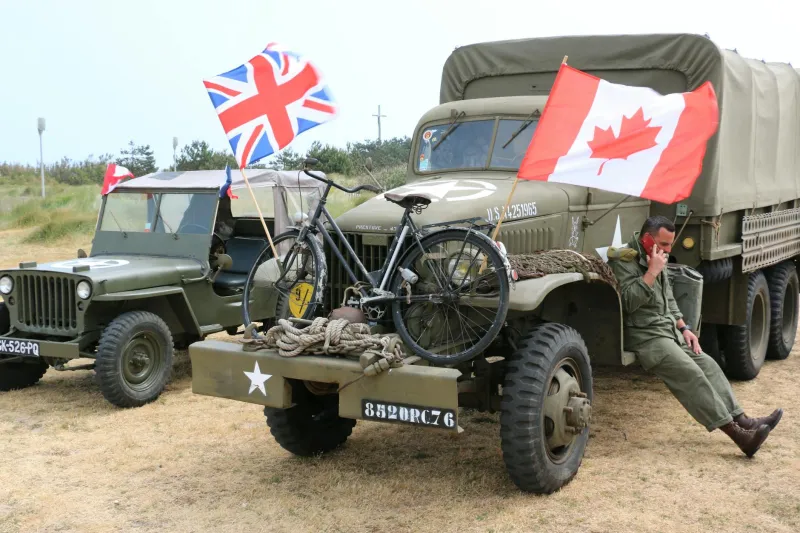
Carney's first "restaurant" was a converted military surplus truck parked outside the Westinghouse plant in Pittsburgh. Every morning at 5:30 AM, he'd fire up a portable grill and start building sandwiches for the shift change. No menu, no choices—just whatever he could make with the cheapest ingredients that still tasted like something a working man would want to eat.
The business plan was pure battlefield logic: find where hungry people gather, get there first, and make sure you never run out. While his competitors worried about ambiance and profit margins, Carney focused on two things that had kept him alive in the war—speed and reliability.
"I learned more about customer service dodging mortars in Guadalcanal than most people learn in a lifetime," he'd later tell a reporter. "When someone's hungry and you've got food, everything else is just decoration."
The truck made money from day one. Not much—maybe fifteen dollars on a good day—but enough to prove that sometimes the simplest ideas work because nobody else thinks they're worth trying.
Building an Empire From the Outside In
By 1950, Carney had three trucks and a problem: banks still wouldn't lend to him, but he was making too much money to ignore. His solution came straight from military procurement—instead of borrowing money to expand, he'd franchise the operation to other veterans who understood his system.
The franchise model wasn't revolutionary, but Carney's approach was. While McDonald's and other chains focused on standardizing everything, Carney's franchisees had one rule: feed people fast, feed them well, and never let them leave hungry. Everything else—location, menu variations, even the name—could adapt to local conditions.
"Ray Kroc wanted to build the same restaurant in every town," said business historian Margaret Phillips. "Carney wanted to build the best restaurant for each town. It's the difference between industrial thinking and guerrilla thinking."
The strategy worked because it came from someone who'd learned to survive by adapting, not by following procedures. Carney's franchisees opened in truck stops, factory districts, and small towns that bigger chains ignored. They served whatever the local workforce wanted to eat, stayed open whatever hours made sense, and treated every customer like someone whose business actually mattered.
The Skills They Don't Teach in Business School
By 1965, Carney's chain had grown to over 200 locations across the Midwest and South. The secret wasn't sophisticated marketing or financial engineering—it was the kind of operational discipline that only comes from genuine scarcity.
Carney never hired consultants, never commissioned market research, and never borrowed money he couldn't pay back immediately. Every expansion decision came down to a simple question: would this help us feed more people better? If the answer was yes, they did it. If not, they didn't.
"Frank ran his business the way he ran his squad in the war," remembered longtime franchisee Tom Morrison. "Take care of your people, know your territory, and never make a promise you can't keep. It sounds simple until you try to actually do it."
The chain's success attracted attention from larger restaurant companies, but Carney turned down every buyout offer. He'd built something that worked precisely because it came from the outside—from someone who'd learned business by necessity rather than theory.
When Experience Beats Education
Carney's story challenges the assumption that formal training always beats practical experience. His competitors had MBAs, market research, and sophisticated financial backing. What he had was three years of making life-or-death logistics work under impossible conditions.
The difference showed in how they handled problems. When supply chain issues hit the restaurant industry in the 1970s, established chains struggled to adapt their standardized systems. Carney's franchisees, trained to work with whatever they could get, barely noticed the disruption.
"We'd been making do with less since day one," Morrison explained. "When times got tough, we just got more creative. For us, scarcity wasn't a crisis—it was Tuesday."
Today, the chain Carney built from a surplus truck and fifty-seven dollars serves millions of customers annually. The company went public in 1986, making millionaires of franchisees who'd started with nothing but a willingness to work harder than their competition.
Frank Carney died in 1994, still believing that the best business education comes from learning to succeed when failure isn't an option. His story proves that sometimes the most valuable skills are the ones nobody wants to teach—and that the biggest opportunities often belong to people who can't afford to fail.