The Ghost Architect: How America's Most Wanted Designer Hid in Plain Sight

The Man Who Never Existed
In 1952, the name David Kellerman appeared on architectural plans for a modest elementary school in Dayton, Ohio. The building was unremarkable—red brick, large windows, sensible layout. What made it extraordinary was that David Kellerman didn't exist.
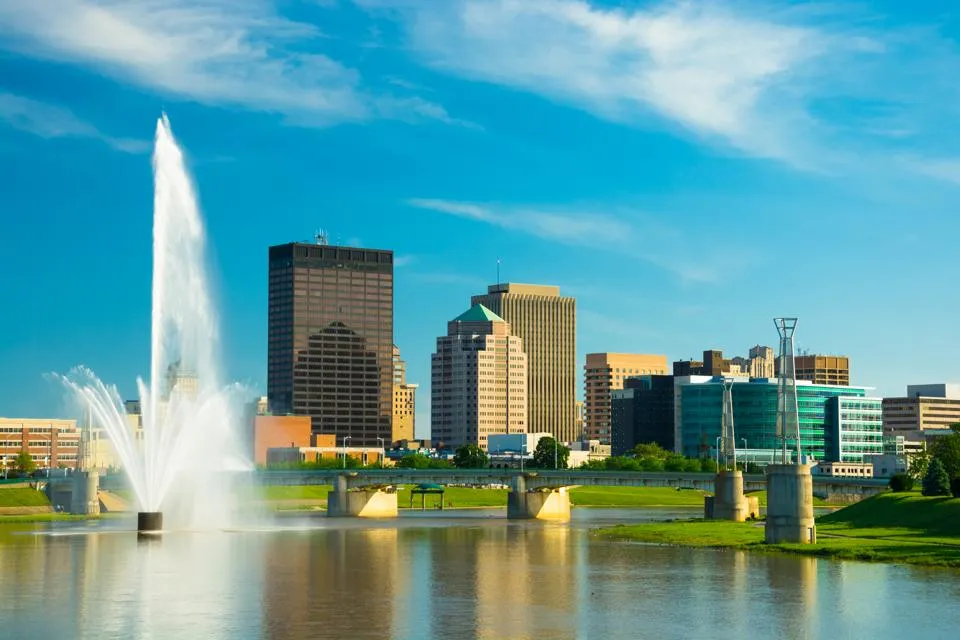 Photo: Dayton, Ohio, via specials-images.forbesimg.com
The real architect was Samuel Roth, and by 1952, Sam Roth was unemployable. The House Un-American Activities Committee had branded him a Communist sympathizer after he'd attended a few socialist meetings in college twenty years earlier. His architectural license was revoked. His firm dissolved overnight. His name became poison in professional circles.
So Sam Roth died, professionally speaking, and David Kellerman was born.
The Erasure
Roth's fall had been swift and merciless. In 1951, he was designing civic buildings across the Midwest, known for his innovative use of natural light and his ability to create public spaces that felt both grand and welcoming. His schools were particularly celebrated—buildings that somehow made learning feel like an adventure.
Then came the blacklist. A former colleague, desperate to save his own career, named Roth as someone who'd expressed "un-American sympathies." The evidence was thin—some leftist pamphlets found in his office, attendance at a few labor rallies, a donation to Spanish Civil War refugees. But in 1951, thin evidence was enough.
Within months, Roth couldn't get work designing doghouses, let alone public buildings. His wife left him. His savings evaporated. At forty-three, he was professionally dead.
The Resurrection
But Roth had spent his career studying how buildings could transform communities. Now he applied that same analytical mind to transforming himself.
He moved to Cleveland, grew a beard, and became David Kellerman—a name borrowed from a tombstone in a rural cemetery. He forged credentials, created a fictional work history, and most crucially, he partnered with a young architect named James Morrison who was willing to lend his clean name to their collaboration.
Morrison would be the face of their firm. Kellerman would be the invisible genius behind it.
Building America, One Lie at a Time
For the next eighteen years, "Kellerman" designed hundreds of buildings across America. His signature style—maximizing natural light, creating flexible community spaces, integrating buildings seamlessly with their neighborhoods—became the template for postwar American architecture.
He designed the Chicago housing project that became a model for public housing nationwide. His hospital layouts revolutionized patient care by making healing environments feel less institutional. His schools, built in dozens of cities, pioneered the open-classroom concept that would define American education for decades.
All while living in constant fear of discovery.
The Close Calls
There were moments when his secret nearly surfaced. In 1958, a former colleague thought he recognized "Kellerman" at a construction site in Detroit. Roth claimed mistaken identity and transferred the project to Morrison, avoiding the site for months.
In 1963, an FBI investigation into Communist infiltration of the construction industry came within inches of exposing him. Agents interviewed Morrison about his mysterious partner, but Morrison's story held. Kellerman, he explained, was simply a reclusive genius who preferred to work behind the scenes.
The investigation moved on. Roth kept building.
The Legacy Hidden in Plain Sight
By 1970, McCarthyism had faded, and Sam Roth might have reclaimed his real name. But David Kellerman had become too successful to abandon. The firm of Morrison & Kellerman was one of the most respected architectural practices in the Midwest. Revealing the truth would have destroyed not just Roth, but Morrison and their dozens of employees.
So Roth remained Kellerman until his death in 1984. He never saw his real name on a building again. His obituary listed him as David Kellerman, with no mention of his previous identity.
The Buildings That Remember
Today, millions of Americans work, learn, and heal in buildings designed by a man who officially never existed. The Kellerman Elementary School in Dayton still serves students seventy years later. The Morrison-Kellerman Community Center in Cleveland hosts thousands of events annually. The Saint Mary's Hospital complex in Milwaukee, with its revolutionary patient-centered design, has been copied in medical facilities worldwide.
 Photo: Saint Mary's Hospital, via images.squarespace-cdn.com
None bear Sam Roth's name. Few people know the real story of their creation.
When Erasure Becomes Art
Roth's story reveals something profound about creativity and resilience. When the government tried to erase him, he didn't disappear—he multiplied. He became both the destroyed Sam Roth and the invented David Kellerman, channeling his rage at injustice into buildings that would outlast the political hysteria that tried to silence him.
His architecture speaks to the particular hunger of the erased—the drive to create something permanent when your own existence feels precarious. Every building became a form of revenge against those who declared him un-American, proof that his vision of community and beauty was more enduring than their fear.
In trying to make Sam Roth disappear, McCarthyism accidentally created one of America's most prolific architects. The man they couldn't allow to exist kept building the country they claimed to protect.
And in a final irony, the buildings that define postwar American life—symbols of democratic values like education, healthcare, and community—were secretly designed by a man his own government had branded an enemy.
Sometimes the most American thing you can do is refuse to let America tell you who you're allowed to be.