The Education Hidden in Yesterday's News
Luis Morales learned English one stock quote at a time.
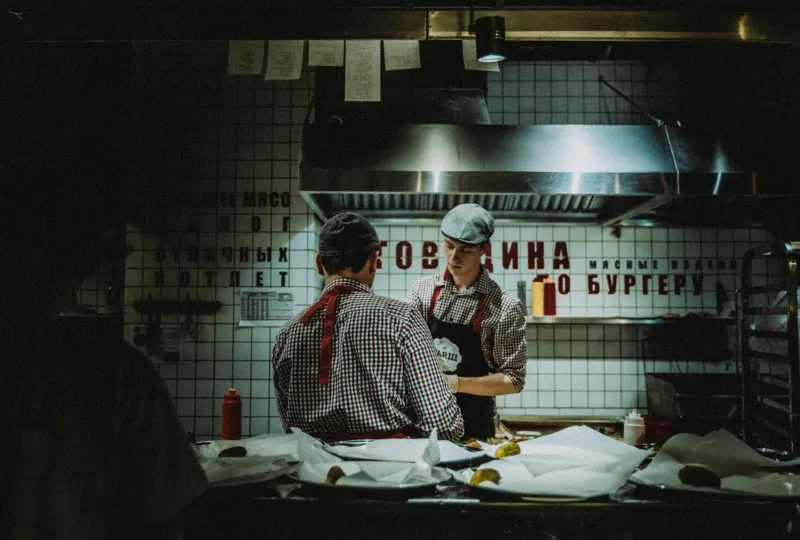
Every morning at 4 AM, he'd arrive at Mickey's Diner on 42nd Street, tie on his apron, and prepare for another sixteen-hour shift washing dishes, busing tables, and mopping floors. But while other dishwashers focused on keeping their heads down, Luis had developed an unusual habit: collecting the newspapers left behind by the Wall Street crowd who grabbed coffee before their trading day began.
The Financial Times, Wall Street Journal, Barron's—discarded like trash after a quick scan of the headlines. To Luis, they were treasure.
"I didn't understand maybe ninety percent of what I was reading those first months," Luis recalls from his corner office overlooking that same diner, now thirty years later. "But I understood numbers. And I understood when people were excited or scared."
What started as curiosity became obsession. Luis would arrive early to claim the best newspapers before they hit the garbage, studying them during his fifteen-minute breaks with a Spanish-English dictionary he kept wrapped in plastic in his back pocket. Stock symbols, earnings reports, merger announcements—he absorbed it all with the intensity of someone who knew this knowledge might be his only ticket out.
The University of Overheard Conversations
But Luis's real education happened not in the pages of discarded newspapers, but in the conversations floating over the counter.
Mickey's Diner sat in the heart of Manhattan's financial district, a greasy-spoon refuge for traders, analysts, and junior bankers who needed cheap fuel before market open. While wiping down tables and refilling coffee, Luis became an invisible observer of Wall Street's daily dramas.
"They talked like I wasn't there," he says. "Which was perfect for me."
He heard about deals before they hit the news. He watched grown men panic over earnings calls and celebrate acquisitions that wouldn't be announced for weeks. More importantly, he began to understand the psychology behind the numbers—how fear and greed drove markets in ways that no textbook could teach.
Luis started keeping a notebook, recording not just stock prices but the emotions he witnessed. When IBM announced layoffs, he noted how the traders' voices changed. When oil prices spiked, he watched their body language shift. He was building a database of human behavior that would prove more valuable than any Bloomberg terminal.
From Dishwater to Deep Pockets
The breakthrough came during the 1987 market crash.
While seasoned traders panicked and hedge funds imploded, Luis saw opportunity. Using $3,000 he'd saved from three years of dishwashing—money originally meant for his family back in Puerto Rico—he made his first trade through a discount broker.
He bought shares in companies he'd watched the diner's customers abandon in terror. Not because he had insider information, but because he'd learned to read the cycle of panic and recovery that played out in Mickey's Diner every few months on a smaller scale.
When the market rebounded, his $3,000 had become $12,000.
"That's when I knew I wasn't just washing dishes anymore," he says. "I was in school."
Building an Empire One Trade at a Time
Luis continued working at the diner for two more years, but now he was funding a growing trading account with every paycheck. His strategy was simple: bet against the conventional wisdom he overheard during lunch rush, and trust the patterns he'd observed in three years of watching fear and greed play out in real time.
By 1990, he'd saved enough to quit the diner and rent a desk at a small trading firm. By 1995, he was managing money for some of the same customers who'd once ignored him while he cleared their tables. By 2000, he'd founded Morales Capital Management, an independent trading firm that would eventually manage over $2 billion in assets.
Today, Luis employs forty-three people, including several former dishwashers and busboys he's trained in his unconventional methods. His hiring philosophy is simple: look for people who understand hunger, who pay attention when others don't, and who aren't afraid to learn from sources that traditional finance would consider beneath notice.
The Outsider's Advantage
What Luis discovered washing dishes in Mickey's Diner was something that expensive MBAs often miss: markets aren't driven by formulas, they're driven by human psychology. And human psychology is best understood by people who've learned to survive by reading rooms, understanding unspoken hierarchies, and recognizing opportunity where others see only obstacles.
"Wall Street has this idea that you need credentials to understand money," Luis explains. "But money is just human emotion with numbers attached. And if you've ever worked in service, you know how to read human emotion."
His success hasn't gone unnoticed. Harvard Business School has invited him to speak three times. The Wall Street Journal—the same publication he once pulled from Mickey's trash cans—has featured him on their front page. But Luis still starts most mornings with coffee from Mickey's Diner, now as a customer rather than an employee.
"Sometimes I sit at the same table where I used to clear dishes," he says. "It reminds me that the best education isn't always the most expensive one. Sometimes it's just paying attention when everyone else thinks you're invisible."
The kid who learned English from discarded newspapers now runs one of the most successful independent trading firms in New York. And he did it not despite his time washing dishes, but because of it.