She Was Erased From the Record. The Rockets Flew Anyway.
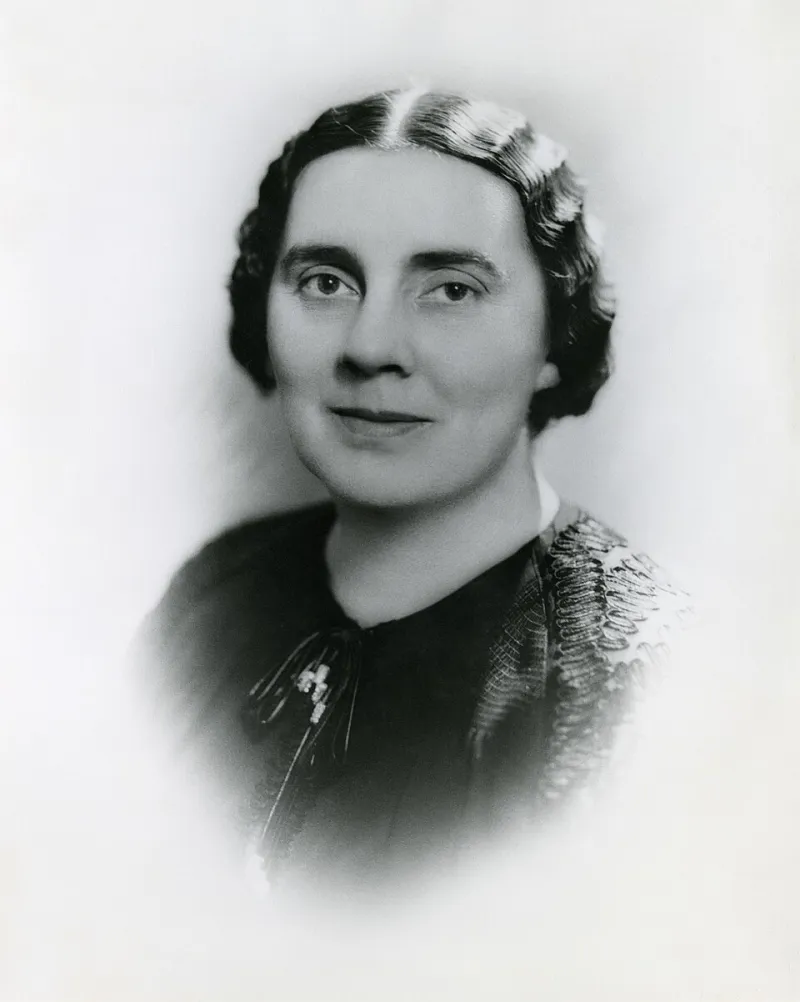
Photo: Underwood & Underwood / Adam Cuerden, Public domain, via Wikimedia Commons
The letter arrived on a Tuesday in October 1953, and Eleanor Marsh read it twice before she understood what it meant. Her security clearance had been suspended pending review. The review, she was given to understand informally, would not go well. Her brother Thomas had attended three meetings of a socialist reading group in 1947 — meetings he'd stopped attending after two sessions because, as he later explained, he found them tedious. It didn't matter. In the Washington of 1953, association was guilt, and guilt was contagious.
 Photo: Eleanor Marsh, via eleanalee.files.wordpress.com
Eleanor was thirty-one years old, a materials scientist with a graduate degree from the University of Michigan and four years of work at a government research facility in Maryland. She had spent those four years studying the behavior of metal alloys under extreme heat — the kind of extreme heat that a vehicle generates when it tries to come home from space.
 Photo: University of Michigan, via i.pinimg.com
By the end of the month, she was out of a job. Her name began disappearing from the research she'd contributed to. The process was quiet and thorough, the way such things were done then.
What nobody anticipated was what she would do next.
The Wilderness Years
The immediate aftermath was brutal in the practical sense. Eleanor was not dramatic about it — by all accounts, she was not a dramatic person — but the financial and professional consequences were severe. She moved from Maryland to Cincinnati to live with her parents while she figured out her next step. She was, by the standards of her training and ability, unemployable in any position that mattered.
The government research world was closed. The major aerospace contractors were, at that moment, deeply cautious about anyone who'd had clearance issues, regardless of the specifics. Universities were skittish. The McCarthy era had a way of making institutions prioritize their own comfort over any particular individual's qualifications.
She spent eight months working as a chemistry teacher at a Cincinnati high school. She was, by student accounts, extraordinary at it. She was also, by her own account, slowly going quietly crazy.
The break came through a connection that had nothing to do with her professional network — a neighbor whose brother-in-law ran a small industrial materials testing firm in Dayton. The firm did contract work for manufacturers: stress testing, composition analysis, heat tolerance studies. Nothing classified. Nothing glamorous. Nothing that would attract the attention of anyone in Washington.
Eleanor took the job.
The Invisible Work Begins
What the Dayton firm had — and what Eleanor recognized immediately — was a problem that nobody in the wider aerospace world had solved cleanly: the behavior of ceramic composite materials at the temperature ranges experienced during atmospheric reentry.
This was not, in 1954, a theoretical concern. The early ballistic missile program was generating real data about what happened to vehicles coming back through the atmosphere at high velocity, and what was happening was not good. Materials that performed beautifully in laboratory conditions were failing in ways that were difficult to predict and even more difficult to prevent.
Eleanor had been thinking about exactly this problem for four years at the Maryland facility. She had, in her own notebooks, the beginnings of a theoretical framework that her supervisors had considered promising but premature. Now, working in a small lab in Dayton with modest equipment and no official mandate from anyone, she had something she hadn't had before: time, and freedom from the bureaucratic priorities of a large institution.
She worked methodically, in the way that her colleagues in Dayton would later describe as almost unsettling in its patience. She tested. She documented. She revised. She tested again.
The Contractor Network
By 1957, the year Sputnik changed everything, Eleanor had developed a materials specification for a ceramic composite heat shield component that was, in the assessment of engineers who later evaluated it, significantly ahead of what the major contractors were working with. The problem was getting it into the hands of people who could use it.
She couldn't approach NASA directly — the agency had been formally established in 1958, and its security protocols were, if anything, more stringent than what she'd encountered before. Her clearance issue hadn't been formally resolved; it had simply been buried under time.
Instead, the work moved the way contraband moves — carefully, through trusted intermediaries, stripped of identifying information. A former colleague who had stayed in the government world and who understood both Eleanor's situation and the value of her research began quietly routing her specifications to engineers who needed them. The documents arrived without attribution. Questions about their origin were discouraged.
This was not, technically, illegal. It was simply invisible.
Over the next decade, Eleanor's materials work — unattributed, uncredited, scrubbed of any name — found its way into the heat shield specifications for multiple spacecraft components. The engineers who received it knew it was good. Most of them didn't know where it came from. A few did and said nothing, because saying something would have required explaining why they were using research from a woman who didn't officially exist in the aerospace world anymore.
What She Got in Return
The honest answer is: not much, for a very long time.
She received consulting fees from the Dayton firm, which grew modestly as her reputation in the small world of industrial materials testing spread. She received, in 1962, a quiet and unofficial letter from a NASA engineer she'd never met, thanking her in terms vague enough to be deniable for "contributions to the field." She received, in 1971, a position at the University of Cincinnati's engineering school — offered, finally, by an institution that had decided the political weather had changed enough to make her hireable.
She taught there until her retirement in 1988. Her students, several of whom went on to significant careers in aerospace and materials science, remember her as someone who was almost allergic to self-promotion. She rarely talked about her earlier work. When pressed, she would say that the work had been done, that it had been useful, and that this was enough.
It was not, by most measures, enough. But it was what she had.
The Long Reckoning
Eleanor Marsh died in 2001. The formal acknowledgment of her contributions to American spaceflight came eleven years later, in a 2012 retrospective published by a NASA historian who had spent years tracking the provenance of certain key materials specifications that had never been properly attributed.
The historian's account was careful and technical, the way such accounts tend to be. But the outline of the story it told was not technical at all. A woman had been erased from the record by a political moment that valued fear over fairness. She had kept working anyway. The work had mattered. The record had eventually, imperfectly, caught up.
It's a story about resilience, yes. But it's also a story about the specific kind of loss that happens when institutions let panic do their thinking for them — the work that gets scattered, the careers that get broken, the names that have to be quietly recovered from footnotes decades after the fact.
The rockets flew. Eleanor Marsh helped keep them from burning up on the way home. It took America fifty years to say so out loud.