When Necessity Meets Desperation
The greatest American inventions didn't emerge from well-funded laboratories or corporate think tanks. They were born in kitchen tables covered with unpaid bills, in garages where the electricity had been shut off, in the minds of people who had nothing left to lose.
Desperation, it turns out, is innovation's most reliable midwife. When survival is on the line, ordinary people discover extraordinary solutions. Here are eight American inventions that emerged not from comfort and security, but from the raw urgency of people who had to think their way out of impossible situations.
The Windshield Wiper: A Mother's Moment of Clarity
Mary Anderson was riding a streetcar in New York City during a snowstorm in 1902 when she noticed something that would change driving forever. The conductor kept stopping to wipe snow from the windshield, causing delays and frustration for passengers.
 Photo: New York City, via newyorkdearest.com
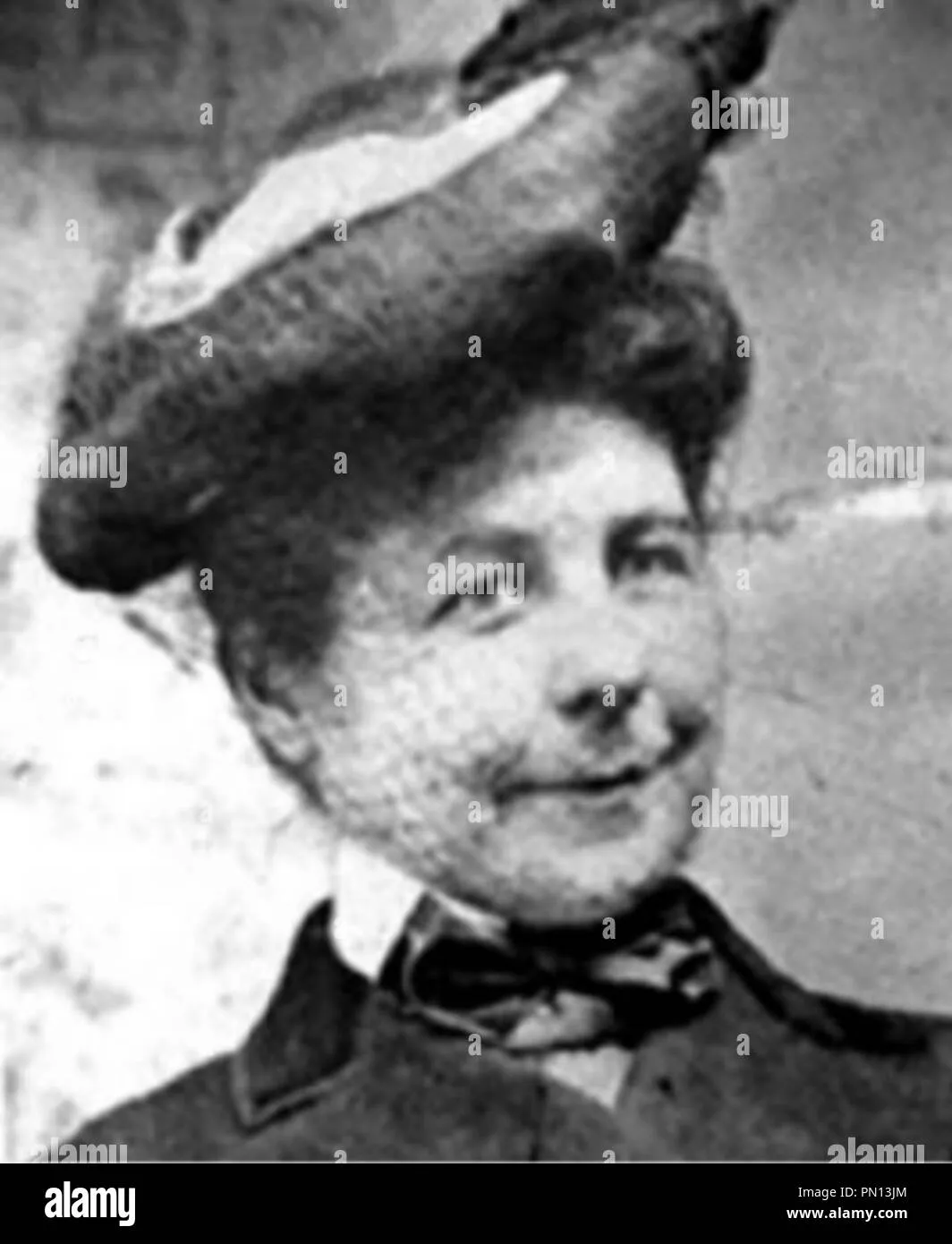 Photo: Mary Anderson, via c8.alamy.com
But Mary wasn't just any passenger—she was a recently widowed woman from Alabama who had invested her life savings in a real estate venture that was failing spectacularly. She was in New York trying to salvage what she could, facing the prospect of returning home penniless.
Watching that conductor struggle with the snow-covered windshield, Mary saw opportunity where others saw annoyance. She sketched her idea on the back of an envelope: a spring-loaded arm with a rubber blade that could clear the windshield from inside the vehicle.
Mary spent her last $200 developing a prototype. When she tried to sell the patent, manufacturers laughed. "Windshield wipers would be a distraction to drivers," they said. "No one wants their view constantly interrupted by a moving arm."
Mary held onto the patent anyway—she couldn't afford to give up. By 1922, when automobiles became commonplace, her "useless" invention was suddenly essential. She never became wealthy from it, but the royalties kept her afloat during the Great Depression.
Super Glue: The Accident That Stuck Around
Harry Coover was working for Eastman Kodak in 1942, trying to develop clear plastic gun sights for the war effort. His team was experimenting with a compound called cyanoacrylate when disaster struck—the substance bonded instantly to everything it touched, ruining expensive equipment.
Coover was facing potential termination. The war contract was crucial to Kodak, and he had just destroyed thousands of dollars worth of precision instruments. In desperation, he began looking for any possible application for this "failed" adhesive.
Six years later, while working on a different project, Coover rediscovered his notes about cyanoacrylate. This time, instead of seeing it as a problem, he saw it as a solution. He realized that an adhesive that bonded instantly without heat or pressure could be revolutionary.
Kodak initially showed little interest. It wasn't until 1958—sixteen years after the original accident—that Super Glue hit the market. Coover's career-threatening mistake became one of the most useful household products ever invented.
The Safety Pin: Ten Hours to Save a Future
Walter Hunt had a problem: he owed a friend fifteen dollars, and in 1849, that was serious money. His creditor was losing patience, and Hunt was facing debtor's prison—a very real threat in 19th-century America.
Sitting at his kitchen table with a piece of wire, Hunt twisted and bent it absentmindedly while trying to think of a solution. Within ten hours, he had created the first safety pin: a simple device with a spring mechanism and a protective clasp.
Hunt immediately sold the patent for $400 to pay his debt and keep food on the table. It was a desperate decision that cost him millions—the safety pin became a global necessity, generating enormous profits for its new owners.
But Hunt's moment of financial panic had created something that would make life safer and more convenient for billions of people. Sometimes the greatest inventions come from the smallest moments of human desperation.
Kevlar: The Polymer That Refused to Behave
Stephanie Kwolek was working for DuPont in 1965, researching lightweight fibers for tire manufacturing. The company was facing pressure from the oil crisis, and finding alternatives to heavy steel belting was becoming urgent.
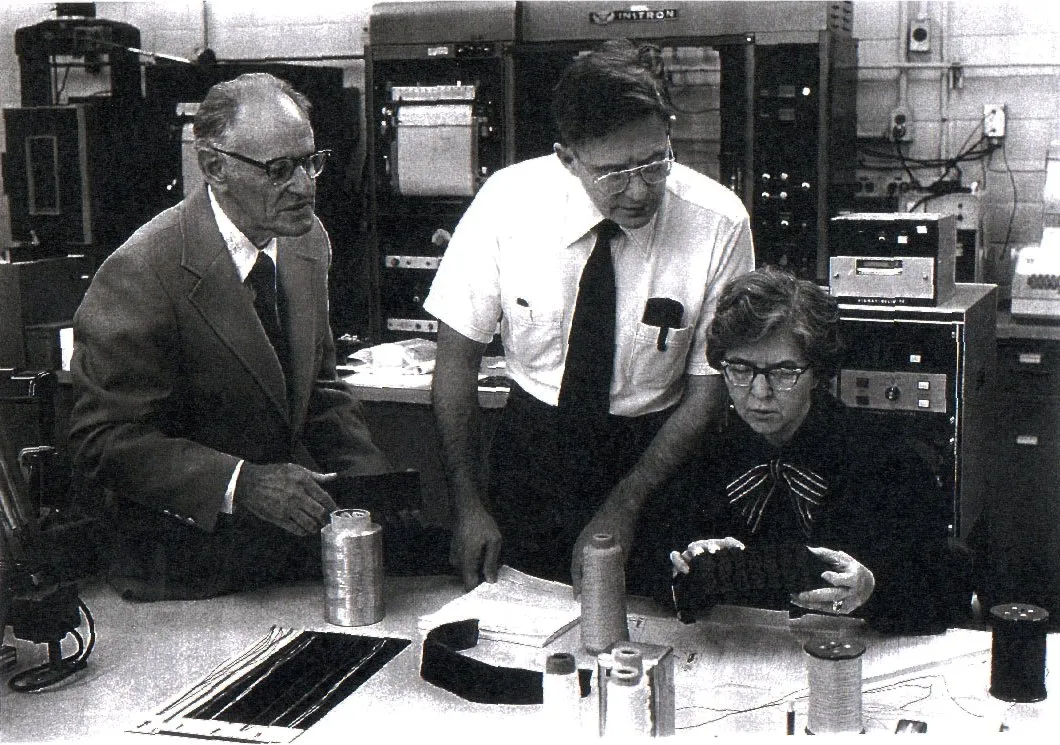 Photo: Stephanie Kwolek, via cdn.builder.io
Kwolek's experiments kept producing a cloudy, strange-looking polymer that seemed useless. Her colleagues suggested throwing it away, but Kwolek was facing a different kind of pressure—as one of the few female chemists at DuPont, she couldn't afford many failures.
Desperation made her persistent. Against conventional wisdom, she convinced a technician to spin her "failed" polymer into fiber. The result was five times stronger than steel by weight.
Kevlar now saves thousands of lives annually in bulletproof vests and protective gear. Kwolek's refusal to accept failure—born from her precarious position in a male-dominated field—led to one of the most important safety innovations of the 20th century.
The Pacemaker: A Wrong Turn That Saved Hearts
Wilson Greatbatch was building a heart rhythm recording device in 1956 when he grabbed the wrong resistor from his parts box. The circuit began producing rhythmic electrical pulses instead of recording them.
Greatbatch was a freelance inventor struggling to make ends meet. His wife was pregnant with their sixth child, and money was tight. He couldn't afford to waste time or materials on mistakes.
But something about those rhythmic pulses reminded him of a heartbeat. Instead of starting over, Greatbatch began wondering if his "mistake" could actually regulate a failing heart.
Two years later, after countless nights working in his barn workshop, Greatbatch had created the first implantable pacemaker. His accidental discovery, born from financial pressure and the inability to waste anything, has since saved millions of lives.
Post-It Notes: The Glue That Wouldn't Stick
Spencer Silver was working for 3M in 1968, trying to develop a super-strong adhesive. Instead, he created something that barely stuck at all—a "low-tack" adhesive that could be easily removed.
3M was unimpressed. Silver spent years trying to find an application for his weak glue, facing pressure to abandon the project entirely. His job security depended on producing commercially viable innovations, and this wasn't one.
The breakthrough came from desperation of a different kind. Arthur Fry, Silver's colleague, was frustrated with bookmarks falling out of his church hymnal. Remembering Silver's removable adhesive, Fry realized it could create repositionable bookmarks.
Post-It Notes launched in 1980 and became one of the most successful office products ever. Silver's "failed" adhesive, combined with Fry's practical problem, created a billion-dollar solution.
The Shopping Cart: Rolling Toward Salvation
Sylvan Goldman owned a chain of grocery stores in Oklahoma City during the Great Depression. Business was terrible—customers could only carry what fit in handheld baskets, limiting their purchases when money was already tight.
Facing bankruptcy, Goldman spent sleepless nights in his store, trying to figure out how to increase sales without lowering prices. Watching a customer struggle with an overfilled basket, he had an idea: what if customers could transport more groceries more easily?
Goldman created the first shopping cart by mounting baskets on wheels with a folding frame. Customers initially resisted—men thought it looked feminine, women thought it appeared lazy. Goldman hired actors to push carts around his stores, creating the illusion of popularity.
The strategy worked. Sales increased dramatically as customers bought more per visit. Goldman's desperation-driven innovation transformed grocery shopping and saved his business.
Bubble Wrap: The Wallpaper That Wouldn't Stick
In 1957, engineers Alfred Fielding and Marc Chavannes were trying to create textured wallpaper by sealing two shower curtains together. The process created air bubbles between the layers, but the product failed as wallpaper—it looked strange and wouldn't stay on walls properly.
Both men were struggling financially, and their small company needed a successful product. Instead of abandoning their bubble-filled creation, they desperately searched for alternative applications.
They tried marketing it as greenhouse insulation, then as pool covers. Nothing worked until IBM needed protective packaging for their new computers. The air bubbles that made terrible wallpaper turned out to be perfect for protecting fragile electronics during shipping.
Bubble Wrap became essential to the growing electronics industry, and later found a second life as the world's most satisfying stress-relief tool.
The Pattern of Desperate Innovation
These eight inventions share a common thread: they emerged from moments when failure wasn't an option. Whether facing bankruptcy, job loss, or professional humiliation, their creators had to find solutions because giving up meant losing everything.
Desperation strips away the luxury of perfectionism. It forces focus on what works rather than what's elegant. It makes people see opportunities where others see obstacles.
Today's most successful innovations often emerge from similar circumstances—entrepreneurs who've burned their bridges, students drowning in debt, workers facing obsolescence. When comfort and security disappear, creativity and resourcefulness often take their place.
The next time you use any of these everyday items, remember: you're holding proof that some of humanity's best ideas come from its most desperate moments. Sometimes you have to lose everything to find the solution that changes everything.